



Austin Grimshaw, Ph.D.
Product Manager, PerformancePack®
With summer well underway, many turfgrass managers are focused on navigating heat, drought, and the day-to-day challenges of the growing season. However, August and September loom for the onset of fall conditions and prepping for winter playing conditions. One of those management practices is overseeding. Our warm-season areas look towards overseeding to maintain playability and color for the winter season. The decision on type of seed and cultivar can be a challenging decision for a superintendent or turf manager. I thought this article would be a nice change of pace to touch on my turfgrass breeding background and discuss improved genetics and resources that are available to aid in that decision.
When discussing overseeding most of the time we are concerned with ryegrass, and specifically Perennial ryegrass (Lolium perenne L.) as annual types usually are low in turf quality. Perennial ryegrass breeding led to turf-type perennial ryegrasses being first released in the USA in the early 1960’s. Since that time, it has become the most widely planted turfgrass with the Rutgers variety, Manhattan, released by Dr. C. Reed Funk in 1967, being recognized as the first cultivar to launch ryegrass as a staple in our industry. Perennial ryegrass is a cool-season (C-3 metabolism) perennial bunch-type grass best adapted to mild climate areas. As a bunch-type grass, it produces only tillers and has limited ability to spread. This is the reason for our heavy seeding rates as these plants cannot spread throughout the season. Continuing germplasm collection and population improvement programs at Rutgers and commercial breeding programs have resulted in a continued stream of better performing cultivars.
During my time at Rutgers, I collected ryegrass from pasture fields in Albania to bring back and incorporate into new cultivars. Collections from centers of origin every year allow the introduction of new traits that can relate to drought and heat tolerance, or disease resistance. With each new National Turfgrass Evaluation Program (NTEP) trial, the best performing cultivars of the previous test usually end up on the second page of the new test only four or five years later. This documents the effectiveness of the continued population improvement programs. They involve many cycles of phenotypic and genotypic selection and population backcrossing. Each cycle of improvement builds on the achievements of all previous cycles in these cross-pollinated species. This means as turf managers we need to be purchasing the newest verities and not be stuck on one we necessarily liked before. The elite ryegrass of a few years ago might be obsolete today.
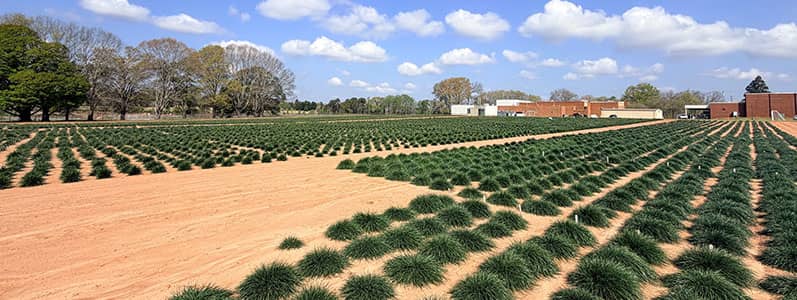
Image courtesy of Turf Merchants, Inc.