


We often focus on spray solution pH because of its impact on pesticide performance, and for good reason. However, one piece that tends to get less attention is how pH affects the fertilizers we mix into those same spray solutions.
In turfgrass management, iron is one of the most commonly applied nutrients after nitrogen. As a micronutrient, iron plays a key role in chlorophyll production, photosynthesis, and energy transfer within the plant. It also supports several enzyme systems tied to respiration and nitrogen use, making it essential for overall plant health.
One reason iron is so widely used is the visual response it provides. Turf typically shows a rapid darkening and greening after application, which is often desirable from a management and aesthetic standpoint. Unlike nitrogen, this color response comes with minimal growth stimulation.
Ferrous sulfate is a popular choice for delivering iron in spray applications. It is widely available, relatively inexpensive, and dissolves easily in water. Once in solution, it separates into ferrous iron (Fe²⁺), which plants can readily use, and sulfate (SO₄²⁻).
When ferrous sulfate dissolves, it also interacts with water in a way that slightly lowers the pH of the solution. This happens because the iron ion attracts and weakens nearby water molecules, leading to the release of hydrogen ions. In practical terms, the solution becomes more acidic.
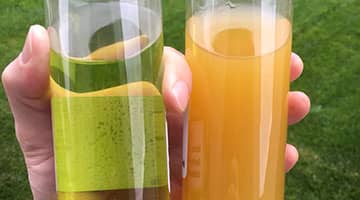
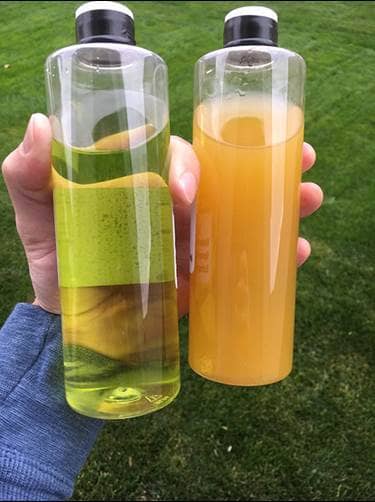
The bigger concern comes when the initial water carrier source is neutral to alkaline (pH >7). Under these conditions, ferrous iron (Fe²⁺) can quickly oxidize to ferric iron (Fe³⁺) or form iron oxides. These forms are much less available to the plant are pretty easy to identify if the spray tank water starts to turn an orange color. While this oxidation process can further lower the pH, it also reduces the effectiveness of the iron you intended to apply.
Maximizing iron performance in a spray application comes down to a few practical steps. First, start with a quality ferrous sulfate product that supplies iron in the ferrous, plant-available form (e.g. Extreme Green®). Some iron sources are already oxidized and won’t provide the same level of response.
Second, consider the formulation. Ferrous sulfate heptahydrate (FeSO₄·7H₂O) tends to dissolve more easily than less hydrated forms (monohydrate, etc.), which can improve mixing and consistency in the spray tank.
Finally, and most importantly, manage the pH of your spray solution before adding the iron. Acidifying the water ahead of time helps keep iron in the ferrous form and reduces the chance of it converting to less available forms during mixing and application. Acidifying or buffering adjuvants are typically inexpensive and can make a noticeable difference in performance (e.g. Spray-Rite®).
The key takeaway is simple: spray solution pH doesn’t just matter for pesticides. It also plays a major role in how effectively nutrients like iron perform. A small adjustment to your mixing process can help ensure you get the full benefit of every application.