If you’ve ever talked turf with a turfgrass pathologist, you probably know how quickly conversations migrate to fungicides, fungicide programs, integrated disease management strategies, and optimizing fungicide performance. From experience, turf pathology, fungicides, and disease management are often the areas where superintendents feel the most uncomfortable.
Turfgrass pathology can be challenging and complex, and it’s easy to get lost in the weeds. Results from fungicide applications often don’t produce the immediate “wow” images you may see with herbicide applications. But nonetheless, fungicides are crucial to managing turf at a high level under stressful conditions. Turf pathogens are always present and highly opportunistic. This perceived complexity of disease management is why many default to calendar-based fungicide programs, programs developed by predecessors, products they’re simply comfortable with, or one-size-fits-all spray programs.
In reality, it doesn’t have to be complicated. You can design a fungicide program tailored to your course that produces excellent results - often while eliminating unnecessary applications.
After years of learning the details of plant and turf pathology, the focus consistently returns to the basics. The fundamentals of turf pathology and fungicides truly set the foundation for a successful disease management program. When you sit down to develop a fungicide program, these are some key points to consider.
1. List the Top 3–5 Disease Issues You’re Dealing With
This step helps you focus. Many fungicides are broad spectrum, so you’ll often still get coverage of other pathogens that may be present. A critical part of this step is ensuring you have a proper diagnosis. Many diseases look similar to one another, many non-disease issues mimic disease symptoms, and the presence of a pathogen does not necessarily mean it is causing the symptoms you see. When an issue arises and you suspect disease, send a sample to a reputable lab for proper diagnosis. Accurate identification is essential before you make fungicide decisions.
2. Know Your Enemy
Once you’ve properly identified your top disease issues, start understanding the pathogen that causes the disease.
Efficacy: Choose fungicides that are effective against your target disease(s). Review university trials to see which fungicides consistently perform best on the diseases you manage most often. Use trusted resources such as TurfFiles (NC State), Plant Disease Management Reports (PDMRs), TurfNet webinars, fungicide research from the University of Wisconsin Turfgrass Diagnostic Lab, GCM/Golfdom/GCI/USGA research articles and blogs, and the Chemical Control of Turfgrass Diseases handbook developed by the University of Kentucky, Rutgers, and the University of Wisconsin, along with contributions from turfgrass pathologists across the country.
Not all fungicides are created equal - and not all fungicides within the same FRAC group provide the same level of control or even target the same pathogens. Decision-support tools such as GreenKeeper App can also help, offering features like Application Advisor, which uses algorithms to analyze past applications and rank products based on performance, research, and disease models.
Application Timing: For effective disease control, a fungal pathogen must absorb a lethal amount of fungicide into its cells. Only actively growing pathogens will absorb fungicides, which is why proper application timing is critical. Preventive applications are essential.
In many cases - especially with soilborne diseases - the pathogen is active and damaging turf weeks or even months before symptoms become visible. By the time symptoms appear, it is often too late to spray, leaving you waiting for the turf to grow out of the damage that has already occurred.
Take Take-all Root Rot (TARR) on bermudagrass as an example. The pathogen is most active when soil temperatures range from 75–90°F, yet symptoms often don’t appear until shoulder seasons when bermudagrass growth is less than ideal. To manage TARR effectively, you should monitor soil temperatures and apply fungicides when they are within that 75–90°F range - often earlier than traditional thinking and well before visible symptoms develop.
Monitor environmental conditions such as soil temperature and moisture for soilborne diseases, and leaf wetness and nighttime temperatures for foliar diseases. Apply fungicides when pathogens are actively growing, recognizing that this timing may differ significantly from when symptoms are visible. Reapply fungicides while you remain within the pathogen’s active growth window, rotating FRAC groups appropriately.
3. Optimize With Pre- and Post-Application Methods
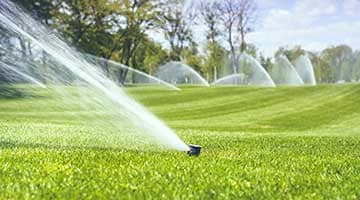
To optimize disease control, you need to deliver an adequate amount of fungicide to the location where the pathogen is actively growing - and at the right time. For soilborne diseases, research shows that maintaining a regular wetting agent program and applying post-application irrigation can improve fungicide movement into the thatch and soil profile.
For foliar diseases, consider carrier volume and nozzle selection to provide better coverage of the foliage. Fungicide applications can be very expensive, so considering these techniques can help you get the most bang for your buck.
If you have questions about developing or refining your fungicide program, your local Simplot Turf & Horticulture turf advisoris a valuable resource. They can help you apply these principles to the specific conditions on your course.